What it does
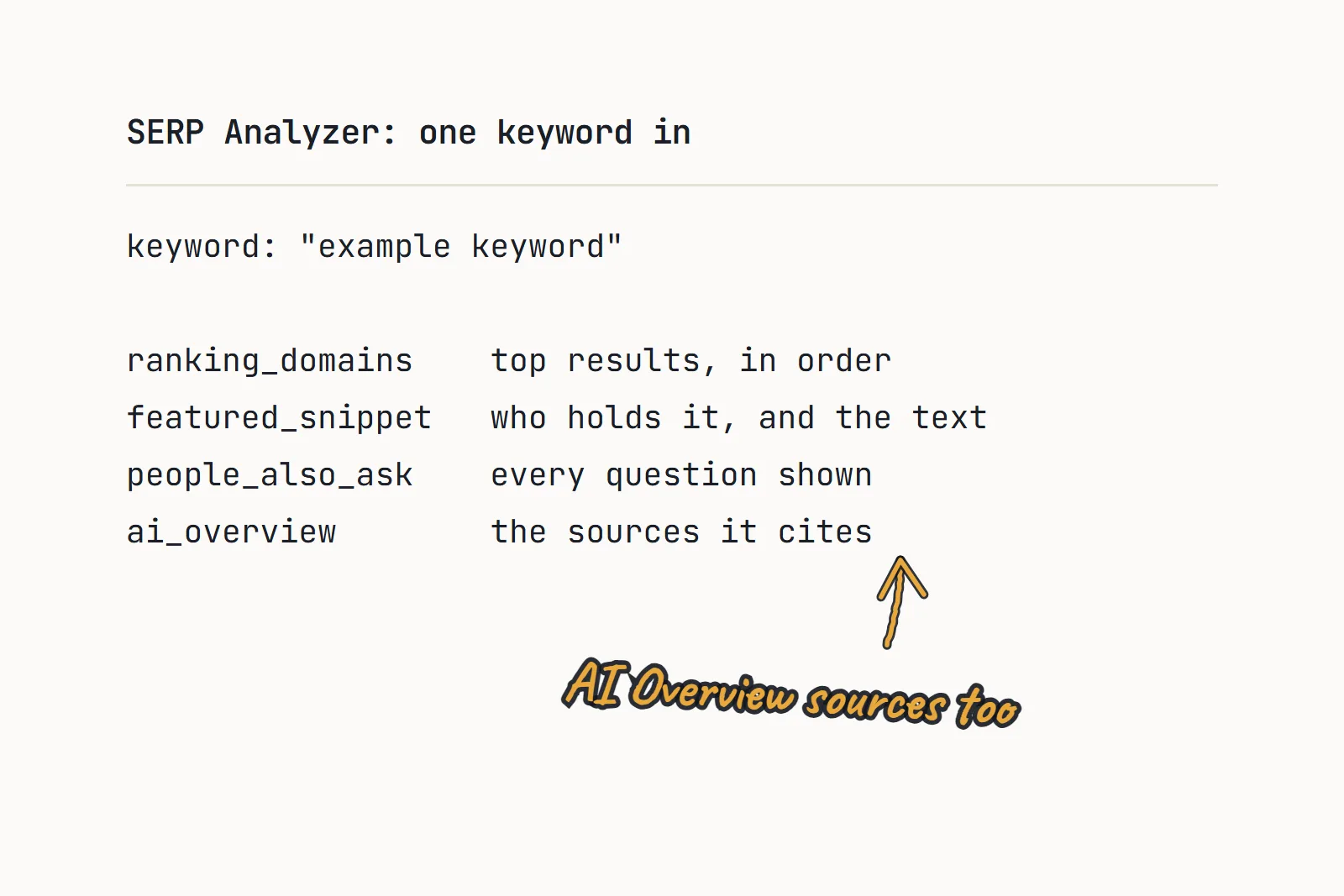
The SERP Analyzer agent takes a keyword as input, fetches the current search results page through a SERP data provider, and parses the response into a structured record: organic ranking domains and positions, any featured snippet and the page that holds it, People Also Ask questions, and — where present — the sources cited inside Google’s AI Overview.
Why it exists
Manually screenshotting search results and copying data into a spreadsheet does not scale past a handful of keywords, and it produces inconsistent data because every person captures slightly different fields. This agent captures the same fields, the same way, every time, so the output can feed directly into a report or a content-gap analysis without cleanup.
How it fits into a workflow
Most people run this as one node in a larger n8n workflow: a list of target keywords goes in, this agent enriches each one with SERP data, and a downstream step (a report generator, a Google Sheet, or a content-analyzer agent) consumes the structured output. It is intentionally narrow — one job, done consistently — rather than an all-in-one SEO tool.
When to use it
Use this when you need a repeatable, structured read on a SERP — not a one-off manual check. It fits best as a step inside a larger reporting or content-audit workflow, where you need the same data pulled the same way for dozens of keywords in a row.
Requirements
- n8n instance (self-hosted or cloud)
- A SERP data API key (e.g. SerpApi or equivalent)
Written by Marvin
I build AI systems for SEO and automation, and share every one of them in the AI SEO Society.
Join the community